
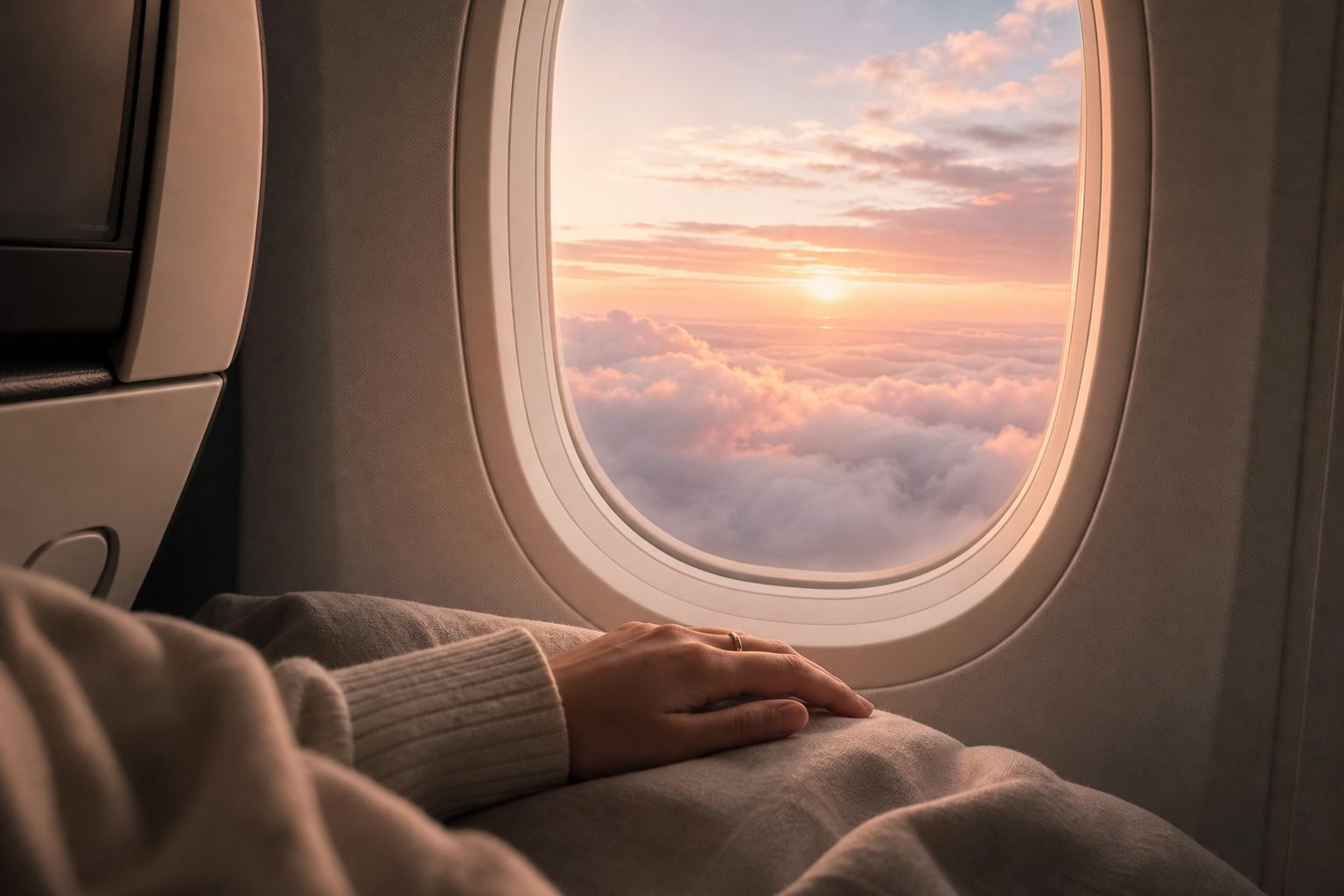
Beat jet lag before it ruins day one
Jet lag is the tax you pay for crossing time zones faster than your body can follow. Your internal clock — the thing that tells you when to sleep, eat and feel alert — is stubbornly set to home, and it takes roughly a day per time zone to fully catch up if you do nothing. But you don't have to do nothing. With a little preparation you can shrink jet lag from a trip-wrecking fog to a mild, manageable wobble, and protect the part that matters most: the first day or two at your destination.
The whole problem comes down to light, timing and a few simple behaviours. You don't need pills or gadgets. You need a plan that starts before you leave.
Understand what's actually happening
Your body runs on a roughly 24-hour internal clock, kept in sync mostly by light. Fly east or west across several zones and the clock and the local time suddenly disagree — so your body wants to sleep at noon and party at 3am. The direction matters: travelling east (shortening your day) is generally harder than travelling west (lengthening it), because it's easier for most people to stay up later than to force sleep earlier. Knowing which way you're fighting tells you how to prepare.
The simple rule of thumb
- Flying east? You need to shift earlier — seek morning light, wind down sooner.
- Flying west? You need to shift later — get evening light, push bedtime back.
- Expect roughly a day of adjustment per time zone if you do nothing — far less if you prepare.
Start shifting before you fly
The most effective jet-lag tactic happens at home, in the three days before departure. Nudge your sleep schedule an hour a day toward your destination's time — going to bed and waking earlier if you're heading east, later if you're heading west. Even shifting your clock halfway before you leave means you land with far less of a gap to close. Pair the new bedtimes with light: bright light in the morning pulls your clock earlier; bright light in the evening pushes it later. A few days of gentle adjustment beforehand is worth more than any in-flight trick.
Set your watch to the destination at the gate
The moment you board, switch your phone and your mind to destination time, and start behaving as if you're already there. If it's the middle of the night where you're going, try to sleep; if it's daytime, stay awake. This single mental shift does more than any sleep mask. Decide your in-flight plan based on arrival time: landing in the morning means you want to have slept on the plane; landing in the evening means you want to arrive tired enough to sleep on schedule.
Fly hydrated, light and unhurried
Cabin air is extremely dry, and dehydration makes every jet-lag symptom worse. Drink water steadily and go easy on alcohol and excess caffeine, both of which wreck the quality of any sleep you do get and leave you more frazzled on arrival. Eat lightly — heavy meals at your body's "wrong" time sit badly. Get up and move every couple of hours to keep your circulation happy on a long flight. None of this is dramatic; it just stops you from arriving in a worse state than the time difference alone would cause.
In-flight checklist for a softer landing
- Reset to destination time the second you sit down.
- Sip water throughout; limit alcohol and late caffeine.
- Sleep only if it's night-time at your destination — use an eye mask and earplugs.
- Move and stretch every couple of hours.
- Keep meals light and timed to where you're going, not where you came from.
Win the first day on the ground
This is where jet lag is truly beaten or lost. However tired you are, resist the long daytime nap — it's the classic trap that locks you into a backwards schedule for days. Get outside into daylight as soon as you can; natural light is the strongest signal your body has for resetting. Stay awake until a sensible local bedtime, even if you have to walk it off. If you're desperate, a single short nap of twenty minutes early in the day is survivable; anything longer or later, and you'll be wide awake at 3am paying for it. Eat your meals on the local schedule to reinforce the new rhythm.
Be kind to the first 48 hours of the plan
Knowing jet lag is coming, plan gently around it. Don't schedule the most important or demanding thing for the morning after a long eastbound flight. Leave the first day or two loose — a walk, an easy meal, an early night — and save the big plans for when you're actually functioning. A little humility about your arrival state turns the first days from a write-off into a soft, pleasant easing-in. Then the trip is yours.
Beating jet lag, start to finish
- Shift your sleep an hour a day toward destination time before you leave.
- Reset to destination time the moment you board, and act accordingly.
- Fly hydrated, light on alcohol, and moving regularly.
- Get daylight on arrival and avoid the long first-day nap.
- Leave the first 48 hours easy; save the big plans for later.
Do these and the fog lifts in a day instead of a week — and you spend the start of your trip exploring, not lying awake counting the hours back home.
You might also like
 Guide
GuideHow to plan a trip from a blank page
Where the whole journey begins.
 Guide
GuideSolo travel for the slightly nervous
Land clear-headed and ready to go alone.