
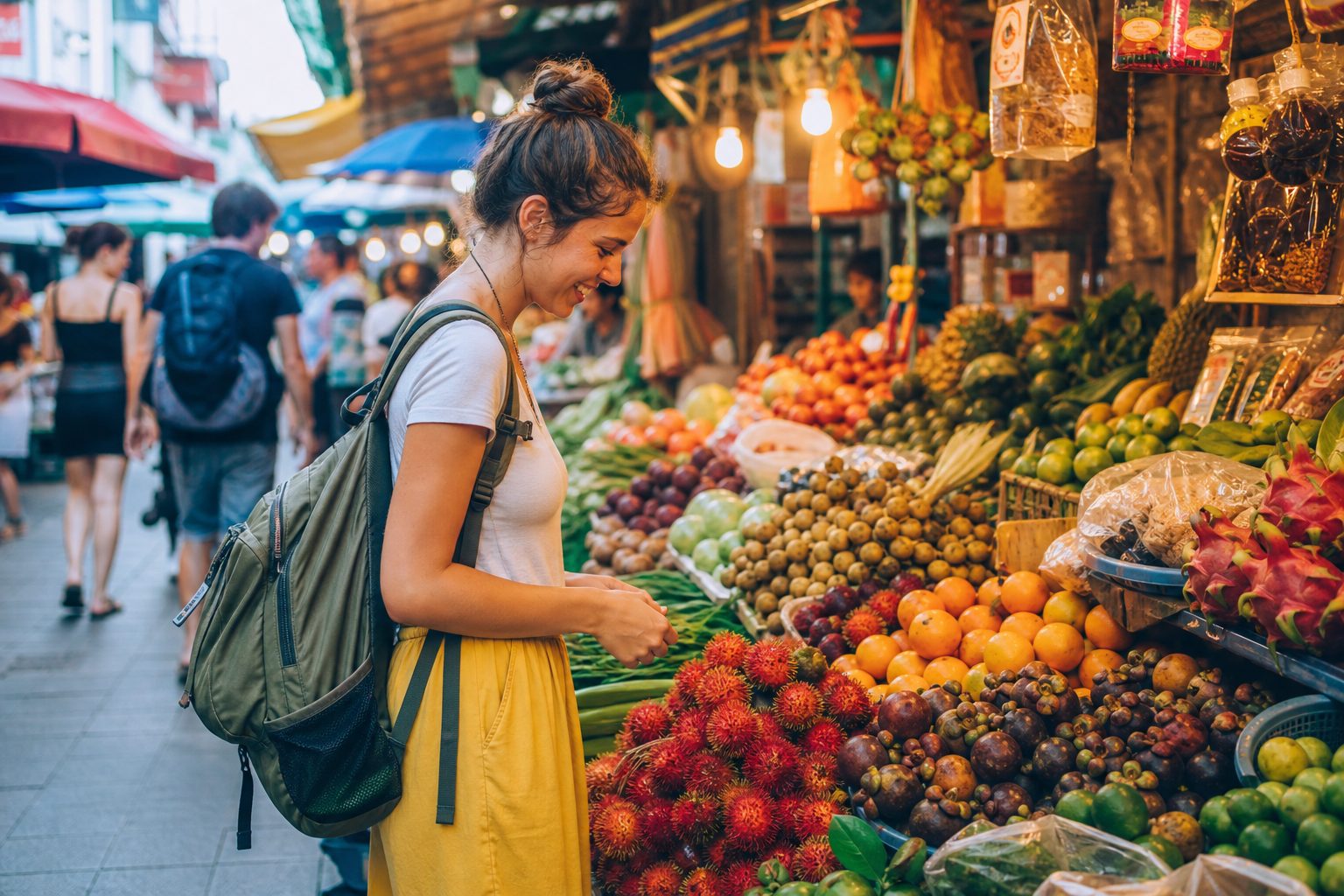
Travel on a real budget without feeling cheap
There's a particular flavour of budget advice that makes travel sound miserable: skip every coffee, walk everywhere in the rain, eat plain bread over a sink. We've tried it, and it doesn't save much — it just sucks the joy out of the trip. Real budget travel isn't about denying yourself a hundred small pleasures. It's about getting a few big decisions right so the small pleasures stay affordable.
Here's the uncomfortable truth most "50 money-saving hacks" articles bury: roughly four categories eat almost your entire travel budget, and skipping a fancy coffee is not one of them. Aim your effort at the big four and you can be relaxed and generous everywhere else.
Know where the money actually goes
For most trips, spending breaks down into four buckets: getting there (flights, trains, the long-haul transport), sleeping (accommodation, night after night), moving and eating (local transport, food, the daily churn), and doing (tickets, tours, experiences). The first two are where the heavy money hides, and — conveniently — they're the two you decide in advance, calmly, from your sofa. That's the opportunity.
People obsess over the daily-churn bucket because that's where they feel money leaving their hand. But trimming five dollars a day off lunch for a week saves you thirty-five dollars; choosing the right week to fly can save you three hundred. Spend your discipline where the zeros are.
The big four, ranked by savings potential
- When you go — shoulder season can halve flights and beds at once.
- Where you sleep — location and type matter more than star rating.
- How you get there — flexible dates and nearby airports beat loyalty.
- How fast you move — every extra stop adds transport, not just nights.
Decision one: travel in the shoulder season
If you take one thing from this guide, take this. The weeks just before and after peak season — late spring, early autumn — are the budget traveller's cheat code. Flights drop, accommodation drops, crowds thin, the weather is often still lovely, and the place behaves like itself again instead of a theme-park version. You're not choosing a worse trip; in many ways you're choosing a better one, for less.
Peak season exists because of school holidays and habit, not because it's the only good time to go. Step a few weeks to either side and the same destination can cost forty per cent less while feeling twice as relaxed. Build your whole plan around when before you fuss over anything else.
Decision two: rethink where you sleep
Accommodation is a nightly cost, so getting it right multiplies across the whole trip. Two levers matter most. First, type: a clean guesthouse, a room in a small family-run place, or a well-reviewed hostel private room can cost a third of a chain hotel and put you closer to the actual place. Second, location: being one neighbourhood out from the dead-centre tourist zone often slashes the price while adding a ten-minute walk and a far better breakfast.
One quiet money-saver hides here too: a room with somewhere to make even simple food. Being able to assemble a market breakfast and the occasional easy dinner doesn't mean skipping restaurants — it means you eat out because you want to, not because you're trapped into three paid meals a day.
Decision three: be loyal to your wallet, not an airline
Getting there is usually the single biggest line item, and it rewards flexibility more than cleverness. Keep your dates loose by a day or two, check the airports near your destination as well as the obvious one, and look at flying mid-week. Set a price alert early so you learn what "a good fare" actually looks like for your route — without that baseline, you can't tell a bargain from a panic-buy. And once you see a genuinely good fare, book it. Waiting for theoretical perfection is how people miss the good-enough.
Daily-spend habits that don't feel like sacrifice
- Eat your big meal at lunch, when set menus are cheapest — then graze in the evening.
- Walk the first day; it's the best way to learn a place and it's free.
- Carry a refillable water bottle — small money, but it adds up and cuts waste.
- Buy one good local transport pass instead of paying per ride.
- Pick a couple of paid experiences you'll remember, and let the rest of the days be free wandering.
Decision four: slow down to spend less
This one surprises people. Moving constantly is expensive — every hop is another train, another transfer, another first-and-last-night premium, another day where you eat all your meals out because you've nowhere to settle. Staying put for longer in fewer places cuts transport, often unlocks weekly accommodation discounts, and lets you shop and cook like a temporary local. Slow travel isn't just calmer; it's frequently cheaper per day. The frantic, ten-cities-in-ten-days trip is usually the priciest way to see a country and the least satisfying.
Spend generously on the things you'll remember
Budgeting well isn't about spending as little as possible — it's about spending deliberately. Save ruthlessly on the invisible stuff (the exact hotel, the precise flight, the mid-day churn) so you can be generous on the handful of things that become the memories: the meal you'll talk about for years, the one experience the place is famous for, the splurge that's the whole point of going. A trip with three unforgettable spends and a lean baseline beats a trip of constant medium spending that blurs into nothing.
The budget in one breath
- Win the big four — when, where you sleep, how you get there, how fast you move.
- Travel in shoulder season; it discounts almost everything at once.
- Stay a neighbourhood out, in a place with a kettle.
- Be flexible on flights and book the good-enough fare.
- Go slower, spend less per day, and save your money for the memories.
Do the big things right and budget travel stops feeling like a constraint. It just feels like travel — with money left over for the next trip.
You might also like
 Guide
Guide
How to plan a trip from a blank page
The full planning system, from itch to first booking.
 Tip
Tip
Finding the food locals actually eat
Eat brilliantly anywhere, for less.